Under MGMT Research store policy, visitors in Canada must be at least 19 years old and visitors in the United States must be at least 21 years old. By entering, you confirm that you meet the minimum age for your country.
Every compound shown is presented strictly for controlled laboratory and analytical research—not for human or veterinary use.
01
Research and analytical use only
02
Not for human or veterinary use
03
Responsible handling required
You must be 19+ in Canada or 21+ in the United States to enter MGMT Research.
PROUDLY CANADIAN
MGMT RESEARCH
🇨🇦 CANADIAN ORDERS ONLY AT THIS TIME
FOR LABORATORY RESEARCH ONLY
MGMT RESEARCH / COMPOUND COMPARISON
Sources checked · 29 October 2026
Retatrutide vs. Semaglutide vs. Tirzepatide
Compare receptor mechanisms, study populations and trial outcomes. Learn which results come from a direct comparison and which come from separate studies.
Editorial source check, not a systematic review or clinical peer review. Journal publications, sponsor reports and official labeling are identified in the source list.
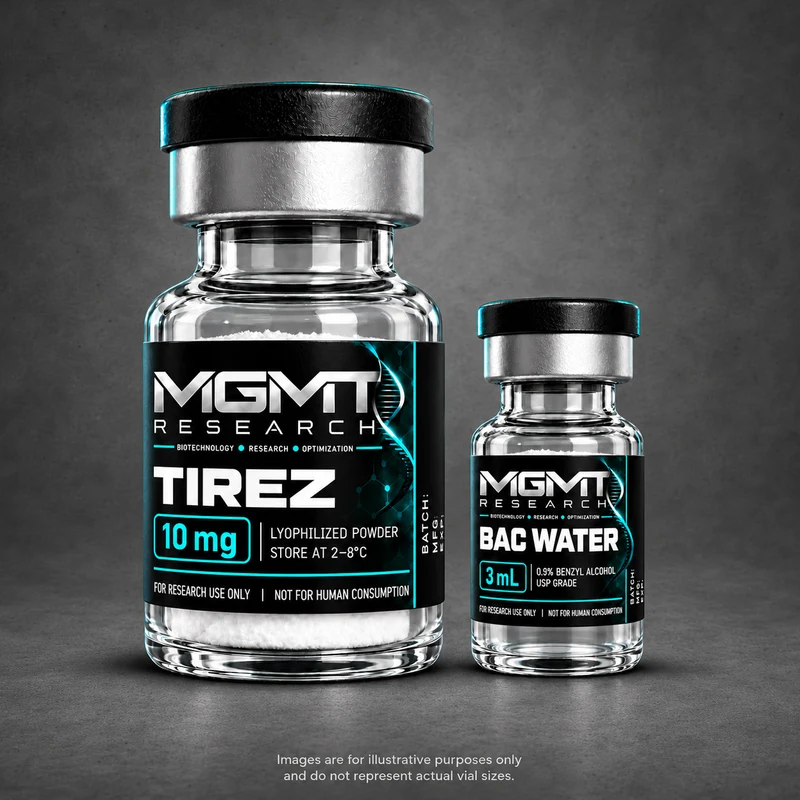
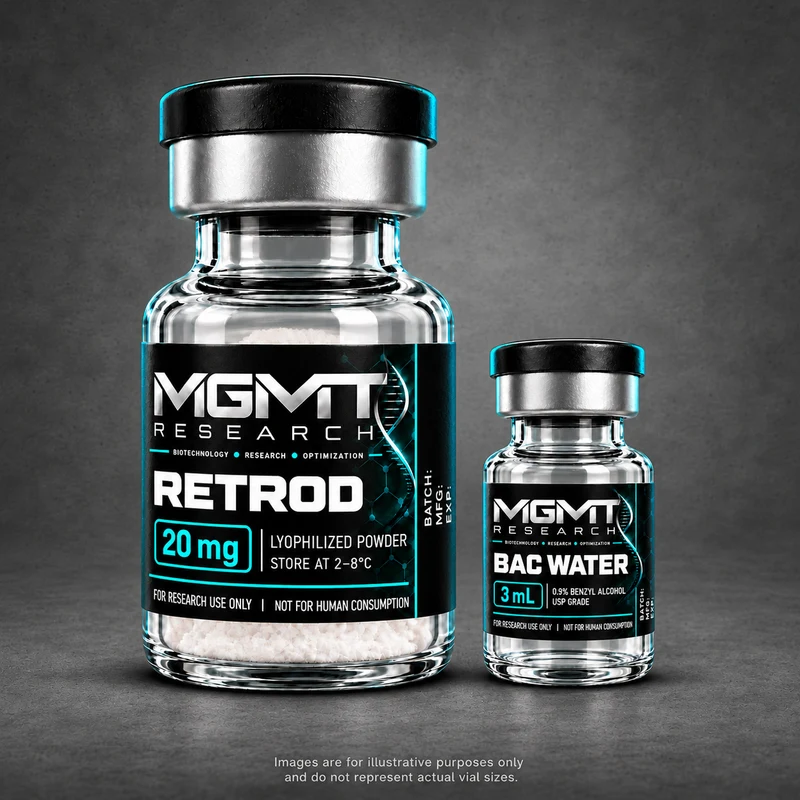
Clinical results below concern the medicines and investigational formulations studied in trials. MGMT Research vial images show our laboratory research packaging; those products are separate from branded medicines and trial supplies. Trial outcomes do not establish outcomes for an MGMT Research product.
KEY TAKEAWAYS
Three profiles. Different evidence.
01
Semaglutide
Single GLP-1 receptor agonism. STEP 1 reported 14.9% mean weight loss at 68 weeks. SELECT reported a hazard ratio of 0.80 for major cardiovascular events in adults with established cardiovascular disease and overweight or obesity, without diabetes. [1][5]
02
Tirzepatide
Dual GIP/GLP-1 receptor agonism. SURMOUNT-1 reported 20.9% at 15 mg using the treatment-regimen estimand, or 22.5% using the efficacy estimand. SURMOUNT-5 directly compared it with Semaglutide: 20.2% versus 13.7% at 72 weeks. [2][3]
03
Retatrutide
Triple GIP/GLP-1/glucagon receptor agonism. The published TRIUMPH-1 trial reported 25.0% mean weight reduction at 80 weeks in its 12 mg group using the treatment-regimen analysis. Retatrutide remains investigational. [21][14]
Read the trial, not just the percentage.
Different populations, durations, doses, and statistical approaches can change the result. A larger number from a separate trial is not proof of superiority in a head-to-head comparison.
THE EVOLUTION OF INCRETIN RESEARCH
How each compound works.
Single, dual, and triple agonism describe the number of receptor systems engaged. They are useful ways to explain the development of this research family, rather than official “generation” classifications.
GLP-1 / shared foundation
GLP-1 receptor activity contributes to glucose-dependent insulin secretion, appetite regulation, and delayed gastric emptying. Semaglutide acts selectively at this receptor. [12]
GIP / the second pathway
Tirzepatide and Retatrutide also engage GIPR. Research examines how GIP and GLP-1 activity interact in insulin secretion, adipose metabolism, and energy balance.
Glucagon / the third pathway
Retatrutide adds GCGR activity. Glucagon can increase hepatic glucose production; combined agonism is being studied for effects on energy expenditure and lipid metabolism. Mechanistic explanations remain model-dependent.
Mechanism references: [15][16]. Weekly injection formulations were used in the trials summarized here; oral Semaglutide formulations also exist. [12]
MGMT RESEARCH / TIREZ
Dual receptor research.
Tirzepatide is the proper compound name. TIREZ is the name used on our vial packaging.
A1C −1.86 percentage points in SURPASS-2, 1 mg; 40 weeks, type 2 diabetes
A1C −2.30 percentage points in SURPASS-2, 15 mg; 40 weeks, type 2 diabetes [4]
TRIUMPH-2: sponsor-reported efficacy analysis at 80 weeks; A1C −1.5 percentage points at 12 mg, −1.6 at 9 mg [8]
Liver research
62.9% MASH resolution without worsening fibrosis / ESSENCE
62% MASH resolution without worsening fibrosis at 15 mg / SYNERGY-NASH
86% relative liver-fat reduction at 12 mg / Phase 2a Different endpoint [9][10][11]
Cardiovascular outcomes
SELECT: hazard ratio 0.80 for MACE vs. placebo
SURPASS-CVOT: noninferior to Dulaglutide in type 2 diabetes and established ASCVD
Dedicated outcomes research ongoing; no established cardiovascular event reduction [5][17][18]
Clinical status
Approved medicines; indications vary by product and jurisdiction
Approved medicines; indications vary by product and jurisdiction
Investigational; Lilly announced a planned Q1 2027 US submission, not an approval date [14][19]
Trial doses describe study arms, not dosing instructions. Brand names belong to their respective owners. MGMT Research is not affiliated with those medicine manufacturers.
WEIGHT-LOSS RESULTS
What the trials actually show.
Semaglutide / STEP 1
14.9% at 68 weeks
In 1,961 adults without diabetes, Semaglutide 2.4 mg produced 14.9% mean weight loss versus 2.4% with placebo, alongside lifestyle intervention. [1]
Tirzepatide / SURMOUNT-1
20.9% at 72 weeks
The 15 mg arm produced 20.9% mean weight loss versus 3.1% with placebo using the treatment-regimen estimand. The efficacy estimate was 22.5%; the two figures answer different statistical questions. [2]
Retatrutide / TRIUMPH-1
25.0% at 80 weeks
In 2,339 adults with obesity without diabetes, the 12 mg group had 25.0% mean weight reduction versus 3.9% with placebo in the published treatment-regimen analysis. [21]
These are selected trial results, not a three-way head-to-head ranking. An efficacy estimand generally estimates the effect if treatment is taken as planned; a treatment-regimen estimand incorporates treatment discontinuation according to the study’s analysis plan.
DIRECT EVIDENCE / SURMOUNT-5
20.2% versus 13.7%.
SURMOUNT-5 randomized 751 adults with obesity without diabetes in an open-label trial of maximum tolerated tirzepatide 10/15 mg or semaglutide 1.7/2.4 mg. It did not compare every current formulation or dose. At 72 weeks, mean weight reduction was 20.2% with tirzepatide and 13.7% with semaglutide: a 6.5-percentage-point difference. Retatrutide was not included. [3]
Only the two SURMOUNT-5 groups appear in this chart. The retatrutide results elsewhere on this page come from separate trials and cannot establish a three-way ranking.
Tirzepatide 20.2%SURMOUNT-5 · 72 weeks
Semaglutide 13.7%SURMOUNT-5 · 72 weeks
0%15%30%
Retatrutide: different populations and analyses
The 2023 phase 2 trial reported 24.2% mean weight reduction at 48 weeks in its 12 mg group. The published TRIUMPH-2 trial in adults with obesity and type 2 diabetes reported 18.8% versus 5.1% with placebo at 80 weeks using the treatment-regimen analysis. These are different study populations. [20][22]
Sponsor reports also give efficacy-estimand results: 28.3% for TRIUMPH-1 and 20.8% for TRIUMPH-2 at 12 mg. Those estimates use different assumptions from the published treatment-regimen figures above; they should not be silently substituted for them. [7][8]
Fat reduction and MASH resolution measure different things.
MASLD describes metabolic dysfunction-associated steatotic liver disease. MASH includes steatohepatitis, involving inflammation and liver injury. Reducing liver fat on imaging is not the same endpoint as resolving MASH on biopsy.
Semaglutide / ESSENCE
In the planned 72-week interim analysis of 800 participants with biopsy-defined MASH and F2/F3 fibrosis, MASH resolution without worsening fibrosis occurred in 62.9% with semaglutide versus 34.3% with placebo. [9]
Tirzepatide / SYNERGY-NASH
This phase 2 trial enrolled 190 participants with biopsy-confirmed MASH and F2/F3 fibrosis. At 52 weeks, 62% of the 15 mg group met MASH resolution without worsening fibrosis, versus 10% with placebo. Missing endpoint biopsies were handled by imputation. [10]
Retatrutide / Phase 2a
At 48 weeks, the 12 mg group showed an 86% mean relative liver-fat reduction; 93% reached liver fat below 5%. Only 43.9% of the substudy participants had liver-fat measurements available at week 48. These imaging results do not establish MASH resolution or fibrosis improvement. [11]
Glucagon receptor activity provides a biological rationale for studying Retatrutide’s hepatic lipid effects. It does not prove that one receptor alone caused the clinical result, or that Retatrutide is superior to the others for liver outcomes.
CARDIOVASCULAR OUTCOMES
Weight loss is not an outcomes trial.
SELECT studied Semaglutide in adults with established cardiovascular disease and overweight or obesity, without diabetes. Major cardiovascular events occurred in 6.5% versus 8.0% with placebo: a hazard ratio of 0.80 (20% lower relative hazard), with a 1.5-percentage-point difference in observed event proportions. The hazard ratio and raw event proportions are different measures. [5]
SURPASS-CVOT studied Tirzepatide against Dulaglutide in adults with type 2 diabetes and atherosclerotic cardiovascular disease and met noninferiority; superiority was not established. This active-comparator study answers a different question from SELECT. [17]
Retatrutide’s dedicated TRIUMPH-Outcomes study is evaluating cardiovascular and kidney outcomes. Weight reduction, blood pressure changes, and lipid changes are not proof of fewer heart attacks or strokes. [18]
SAFETY & TOLERABILITY
Shared symptoms. Different trial contexts.
Nausea, vomiting, diarrhea, and constipation are common in incretin trials, often during dose escalation. Rates from separate trials cannot establish which compound is better tolerated. Formulation, dose, population, and adverse-event collection methods differ.
Retatrutide / TRIUMPH-4 safety signal
At 12 mg, nausea was reported in 43.2%, vomiting in 20.9%, and dysesthesia in 20.9% versus 0.7% with placebo for dysesthesia. Dysesthesia refers to altered or unpleasant skin sensations. Adverse-event discontinuation was 18.2% at 12 mg versus 4.0% with placebo. These are TRIUMPH-4-specific observations from the cited sponsor report. [6]
The cited U.S. Wegovy and Zepbound prescribing labels include pancreatitis, gallbladder disease, dehydration-related kidney injury, and thyroid C-cell tumor warnings. These concerns are not unique to only one compound. The human relevance of the rodent thyroid findings is uncertain; a normal thyroid-function panel does not screen for medullary thyroid carcinoma. [12][13]
Retatrutide remains investigational, with ongoing safety evaluation and no approved prescribing information. Medicine selection and monitoring require a clinician’s assessment of the individual’s history, other medicines, and treatment goals.
CLINICIAN-DIRECTED MONITORING
Follow the relevant medicine label.
The cited U.S. labels support monitoring tied to clinical circumstances. Wegovy labeling directs blood-glucose monitoring in people with type 2 diabetes; both labels address kidney-function monitoring when adverse reactions could cause dehydration. [12][13]
These labels do not provide a universal blood-test panel or a fixed three- or six-month schedule for every person. A clinician or trial team chooses follow-up for the actual medicine, medical history and symptoms. Approved-medicine labeling does not establish a monitoring plan or safe-use period for MGMT research materials.
QUESTIONS THAT REMAIN
Evidence continues to evolve.
Semaglutide has a longer clinical history and placebo-controlled cardiovascular outcomes evidence in the SELECT population. SURMOUNT-5 found greater mean weight reduction with tirzepatide than semaglutide at the doses studied. Retatrutide has encouraging Phase 3 results, but cross-trial percentages do not settle its comparative benefits or long-term safety.
Lilly announced plans for a US Retatrutide submission in Q1 2027. A submission is not an approval or launch date, and timelines can change. Retatrutide had not been approved by any regulatory agency at this review date. [14][19]
PRIMARY SOURCES
Follow the evidence.
Selected primary references checked for this comparison. Source types distinguish journal publications from sponsor reports and official labeling. Some publisher full texts were unavailable; their original abstracts and official reports were checked. Figures are rounded where indicated.
This comparison is educational and does not provide treatment or dosing advice. MGMT Research products are for laboratory research only, not for human consumption or diagnostic or therapeutic use.